Most voice AI agents plateau after launch and wait for a human to retune them. Leaping AI builds agents that analyze their own calls and fix themselves, and customers like Hawesko now resolve 70% of support calls without a human on the line.
Some $6.5 trillion in American wealth sits in trusts administered over spreadsheets, email, and PDFs. Sava raised $10M to become a trust company itself, with AI agents doing the paperwork and humans making the decisions.
Object storage made keeping a file trivial. S2 is doing the same for streams: a serverless API where durable, real-time streams come in unlimited numbers and you pay for what you use. It hit general availability this year on a $3.85M seed led by Accel.
Voice agents stall when every lookup has to cross the network. Moss packages the search index into the app itself, so retrieval returns in about 3ms instead of 400. It was built by two engineers who spent years making Microsoft and Grammarly software fast.
Every production AI agent needs the same plumbing: hosting, OAuth, and monitoring for the tools it calls. Metorial wraps 600+ MCP integrations in a serverless platform so connecting an agent to Slack or Salesforce is a function call, not a project.
Commercial insurance brokers spend half their day retyping the same client data into PDFs, portals, and carrier forms. Casey ingests that data once, assembles carrier-ready submission packages, and puts AI agents on the underwriting follow-ups.
Satellite internet mostly means buying from one American company. Exosat designs satellites with zero export-controlled parts so the rest of the world can build, launch, and run constellations it actually controls.
Teams building AI products keep rebuilding the same web-data stack: browsers, proxies, parsers, caches, retries. Context.dev wraps all of it in one API that returns clean markdown, screenshots, brand data, or JSON in your schema.
Every time engineering ships, the docs fall a little further behind. Promptless is a YC-backed AI teammate that watches pull requests, tickets, and Slack, spots the pages a change made wrong, and drafts the fix as a pull request for review.
The scraped web got frontier models this far, but the expertise they need next was never posted online. Ocular AI recruits vetted experts, records what they know in structured sessions, and turns it into training data, starting with voice.
Insurance still runs on phone calls, but most of the work happens after someone hangs up: updating the policy system, filing the claim, sending the follow-up. Strada builds AI agents that handle the call and the paperwork behind it, for carriers, MGAs, and brokers.
Traditional debt collection recovers a fraction of what's owed and often wrecks the customer relationship doing it. Respaid pairs a real lawyer with AI that picks the timing, message, and channel, and reports collecting half of overdue invoices within twenty days.
India handles more than a billion voice calls a day, most of them in languages other than English and on legacy phone systems. Bolna is building a voice AI orchestration platform for that reality, and it started as open source.
AI agents are long, expensive, and prone to failing halfway through. Trigger.dev treats them as what they are, durable background jobs, and gives TypeScript developers retries, queues, and checkpointing so a task can run for hours and survive a crash.
MCP made it easy to plug an AI agent into Slack, Jira, and your database. It did not make any of that searchable. Airweave is the open-source layer that lets an agent actually find the right ticket, file, or record across every app a company uses.
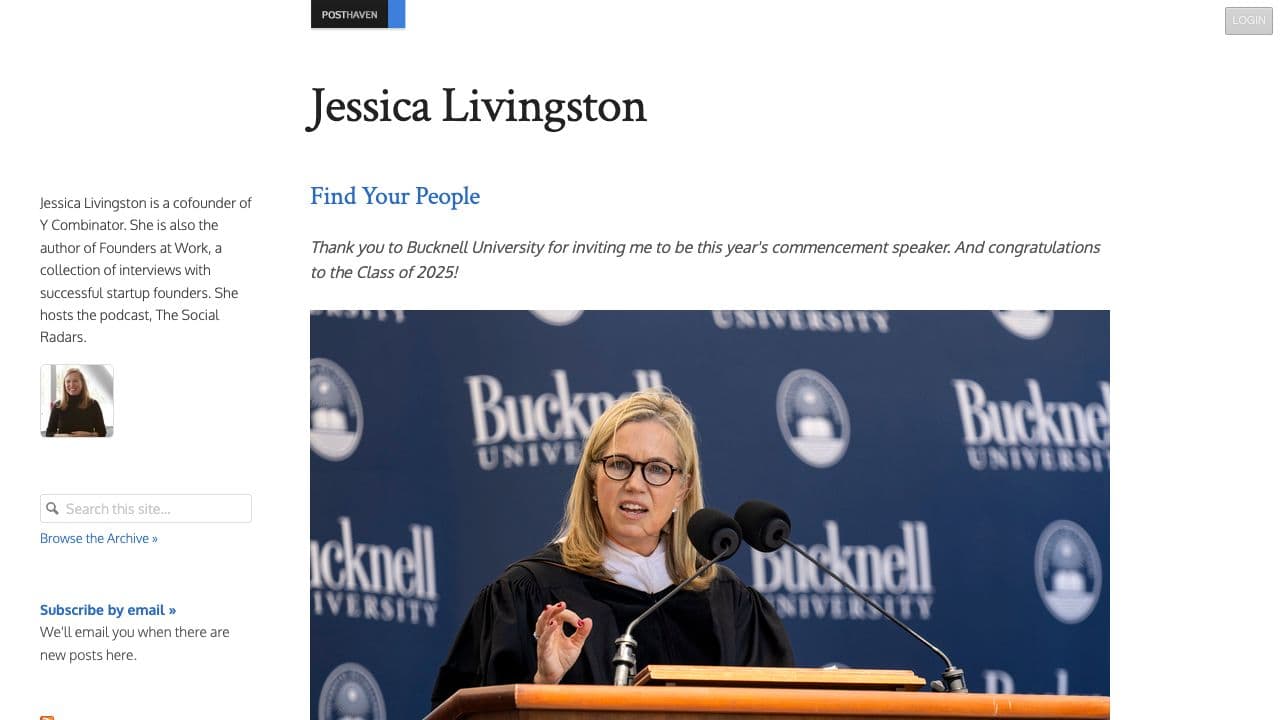
She co-founded Y Combinator, shaped its culture, and could read founders better than anyone in Silicon Valley. So why haven't most people heard of her?
The return-to-office narrative dominates headlines, but the data tells a different story. Remote work is growing, and platforms like RemoteJobs.org are the infrastructure that makes it findable.
Y Combinator alumni no longer just build startups. They run funds, angel networks, and coordinated investing systems that increasingly shape the earliest rounds.
/5 min read
Newsletter
The stories behind the startups, in your inbox.
New posts on AI, SEO, and the companies building both. No spam.